


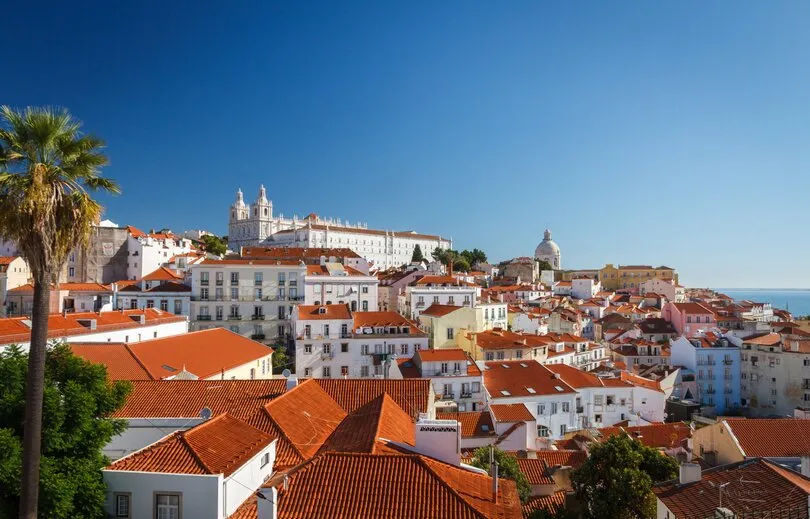
Portugal is a small country in Western Europe which, however, frequently features in searches as a desirable destination for migration.
Indeed, the country can easily win you over with its endless beaches, pleasant climate, delicious cuisine and friendly locals. However, when it comes to moving there, it is worth considering the practical aspects of such a decision.
After all, many things that are taken for granted in your home country will need to be built from scratch in another country, and it is worth starting to think about them as early as the planning stage.
So, this article will not only be about the charms of Portugal, but also about migration in practice.
If you are currently considering which country to move to, we hope our advice will help you make a decision and take the next step.
So,
STAGE 1 – choosing a country for your future home
Why are people so drawn to Portugal?
- An EU country within the Schengen Area, it offers its residents greater opportunities to travel and explore other options for living.
- One of the main factors for many migrants with families, and especially Ukrainians, is safety. Most describe Portugal as a peaceful country with a non-confrontational population and a relatively low crime rate.
- A southern yet mild climate and a wealth of leisure opportunities – beaches for swimming and surfing, mountains, lakes, nature tourism, wine and food tourism, and a multitude of retreats and spa facilities.
- Relatively simple and straightforward naturalisation procedures, with the prospect of obtaining permanent residence and citizenship after a specified number of years.
- Foreign-friendly – locals are non-confrontational, tolerant and loyal towards foreigners, and English is widely spoken.
- Access to free healthcare and educational institutions.
- ‘Humane’ bureaucracy – in Portugal, the work of officials is less formalised, so they can often approach problems on a case-by-case basis.
STAGE 2 – choosing the basis for obtaining residency
One of the advantages of migrating to Portugal is the fairly wide range of grounds that can be used to obtain the right to reside.
Broadly speaking, these can be divided into three groups: Ukrainians now also have the option to apply for temporary protection status.
- Family ties. This group includes applications for legalisation from family members of Portuguese citizens or residents (primarily spouses, children, and sometimes parents).
- Employment ties. Employees of Portuguese companies, private entrepreneurs registered in Portugal, owners of businesses registered in Portugal, or investors are eligible to apply for a migration visa and residence.
- Income from a source abroad. This group includes individuals who receive passive income or work remotely (Nomad).
When choosing a basis for obtaining residency, we advise you to consider the stability of that basis, as otherwise difficulties may arise with renewing your right of residence.
STAGE 3 – choosing a place of residence
Having a place of residence (accommodation) is a mandatory requirement for applying for residency.
However, changing your place of residence will not be a problem for your migration process. As practice shows, the vast majority of foreigners change their accommodation during their first year of residence in the country, opting for cheaper options, more convenient areas, or places with a more comfortable climate.
Of course, the best option is to visit the country, travel around, and choose the most comfortable place to live, but this isn’t always possible.
That’s why we recommend researching the specifics of your future place of residence in advance:
- Decide on the region – south or north, near the ocean or near major cities;
- If you have children, find out about the availability of universities, schools or nurseries in the town or nearby, and international schools if you are considering education in English.
- If there are elderly people or those with special medical needs in the family – it is advisable to choose areas with good access to medical facilities.
- If the purpose of the move is work – it is advisable to look for accommodation nearby; transport links can be checked using apps such as Google Maps.
STEP 4 – gathering documents and submitting an application for a migration visa or residence permit
The specific list of documents and the requirements for their preparation depend significantly on the grounds for obtaining a visa or a temporary residence permit in Portugal.
However, you will always need the following documents: Also, depending on the type of residence permit and where you apply, you may be required to provide employment contracts, tickets to Portugal (or return tickets), educational qualifications, tax certificates, and other documents.
- A valid passport
- An apostilled and translated certificate of good conduct from your country of origin and residence;
- Proof of the source and amount of income (in most cases, this must be at least the minimum wage in Portugal – for 2026, this is €920 per month).
- Proof of residence in Portugal.
- Health insurance.
It is worth noting that currently the list of grounds for obtaining residency directly in Portugal is very limited and requires a certain degree of established ties in the country; therefore, for most foreigners, the most reliable (and often the only available) option is to obtain residency by first obtaining a migration visa (Class D visa).
STEP 5 – Obtaining a visa and moving to Portugal
If your visa application has been approved, you will receive a migration visa, which is usually issued for a period of 4 months. You can then travel to Portugal, submit an application to AIMA and await an appointment to provide biometric data for your residence permit.
If your application could have been submitted in Portugal, you submit your documents directly to AIMA, bypassing the visa application stage.
Usually, the whole process takes at least 8 months, but in practice it often takes 10 months or even over a year. It is therefore worth bearing this in mind when initially renting accommodation and when planning the other stages of your move.
The success of each case depends largely on the quality of the documentation, as most visa refusals are procedural and based on the absence of required documents or their incorrect preparation. We therefore recommend seeking assistance from lawyers in Portugal.
Furthermore, immigration authorities have recently placed great emphasis on preventing fraudulent visa applications, so we recommend using only genuine grounds for obtaining a visa or residency.
Final notes that we advise everyone to review before starting the immigration process.
Portugal can truly win you over, and many people, after moving there, begin to appreciate its lifestyle, climate and atmosphere
At the same time, it is worth understanding that everyone is different, with different goals and preferences, so we wish to warn our readers about certain aspects that may prove problematic for some.
So, think carefully about your decision to move to Portugal, or plan preliminary trips to test your decision, if the following facts are important to you:
- Forget about ‘same-day’ Portugal is a laid-back country, and this applies to the Portuguese themselves. Everything will get done, but perhaps not as quickly as you might like. Many services, particularly those aimed at foreigners, may work to meet specific requirements, even going the extra mile, but generally speaking – get used to waiting, or plan everything well in advance.
- Clear rules governing the work of official or state bodies and banks certainly exist, but Portugal is a country where the ‘human factor’ plays a major role. It matters greatly who exactly you approach and who will handle your request. You may receive radically different results from the same institutions in different locations, or from different staff members within the same institution.
- Issues regarding renting accommodation. Accommodation in Portugal is quite expensive, but on top of this comes the hassle of finding a place to live if you are a foreigner (in which case, the property may turn out to be ‘already booked’, or the deposit may be as high as 6–12 months’ rent).
- There are companies that specialise in letting property to foreigners (very often with Chinese or Russian owners), and in such cases, prices may be above market rates, and the security deposit is very often not returned (on the assumption that the foreign client will not go to the trouble of a legal process, which is also lengthy and costly).
- Moving to Portugal with the aim of finding work is not the best option. Salaries in Portugal are relatively low, whilst the cost of living, particularly if you’re renting, is quite high. It’s best to either have a job offer already in hand, with a clear understanding of your future income and expenses, or to have a stable income from another country (passive income or remote work).
- Portuguese people find it quite difficult to form social bonds with foreigners. So if you can’t imagine life without socialising with friends, you’ll most likely find yourself in the company of other expats.
- Portugal’s climate can be seen as both a blessing and a curse. In the south, it is very hot in summer, and there can be sandstorms from the Sahara. Swimming in the ocean will not be enjoyable for those who prefer warm water. Homes in coastal areas are generally prone to damp and very often suffer from mould. So you may find yourself living in a southern country and spending a significant amount on heating, simply to maintain a comfortable environment in your home.
- The Portuguese public healthcare system can involve months of waiting for an appointment with the right specialist. Therefore, it is very common to take out private health insurance to ensure you can receive prompt medical care when needed.
Conclusion
Portugal is a country that really has a lot to offer, but only to those who not only dream but also plan.
When writing this article, we deliberately avoided an overly ‘promotional’ tone. We are ready to inspire you to move and to help with advice or support; however, we would like your choice to be a fully informed one.
In our opinion, an informed choice is one based not only on expectations, but also on understanding. And with this approach, the chances of building a happy life in a new country increase significantly.